Stops Children Can Enjoy
The standard European motorway service station is an assault on the senses. Fluorescent lights, expensive mediocre food, massive queues for the toilets, and vast expanses of dangerous asphalt where heavy goods vehicles maneuver. For an adult, it is a necessary evil. For a child, it offers zero meaningful rest and often heightens anxiety and overstimulation.
The Case for the Micro-Detour
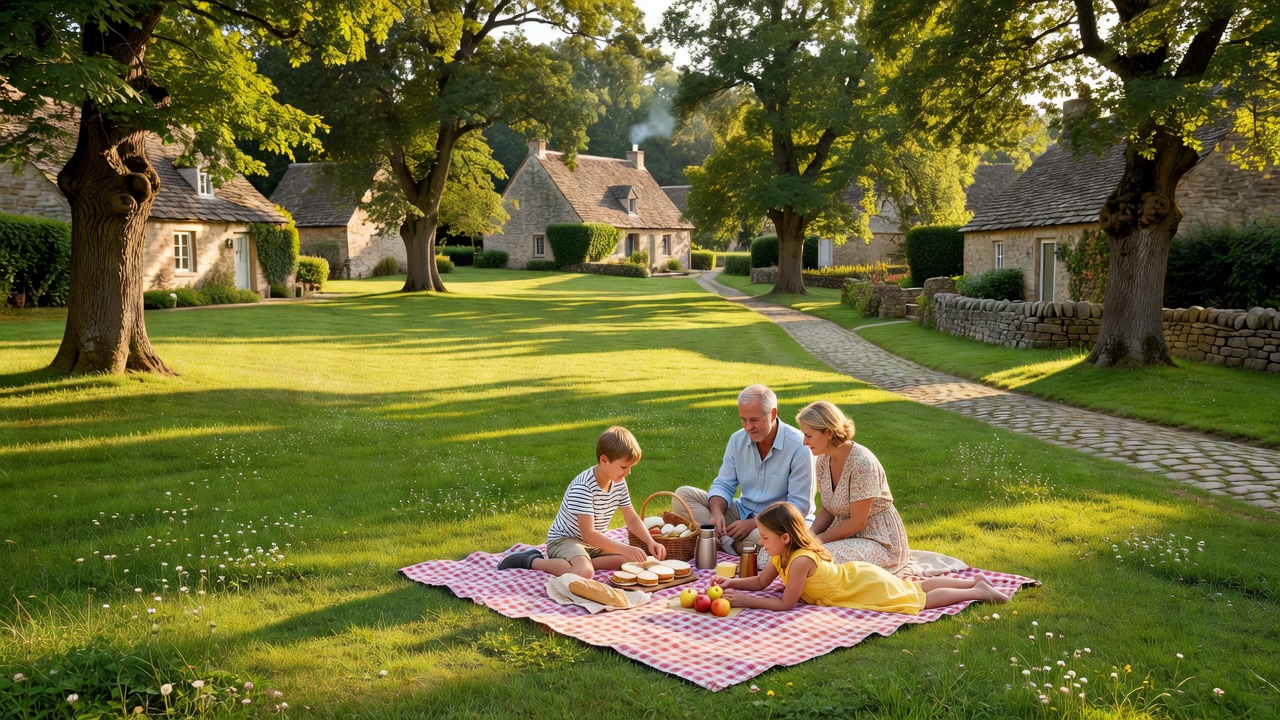
Rather than stopping directly on the toll road, the most effective family breaks require a five to ten-minute detour. Throughout rural France, Germany, Italy, and Spain, exiting the main arterial route leads quickly to small towns with public greens, municipal playgrounds, and quiet bakeries. A half-hour spent kicking a ball on real grass does infinitely more to reset a child's mood than a half-hour spent browsing overpriced chocolate in a petrol station concourse.
Navigating French Aires
The French motorway system provides a unique asset: the *Aire*. However, they are not created equal. The *Aire de Service* features petrol stations, restaurants, and massive crowds. The *Aire de Repos*, conversely, usually offers only toilets and picnic tables set in woodland or landscaped areas. For families carrying their own food, the latter provides a vastly superior, calmer environment for children to stretch their legs.
Packing the Break
To successfully avoid the chaotic service stations, you must be self-sufficient. This means packing a dedicated picnic bag that is easily accessible without unpacking the entire boot. A rug, a frisbee, pre-made sandwiches, and fresh fruit turn a mundane break into a localized event. Relying on finding healthy, appealing food at random highway exits places unnecessary pressure on the driver.
Strategic Rest Mapping
Do not wait until the children are crying to look for a stop. When planning your route, use satellite maps to identify lakes, provincial parks, or large village squares that sit roughly at the two and four-hour marks of your journey. Having three potential, high-quality stops marked on your navigation system provides options. If everyone is happy at option A, you push on to option B. But knowing exactly where peace and quiet can be found removes a massive layer of stress from the driving day.